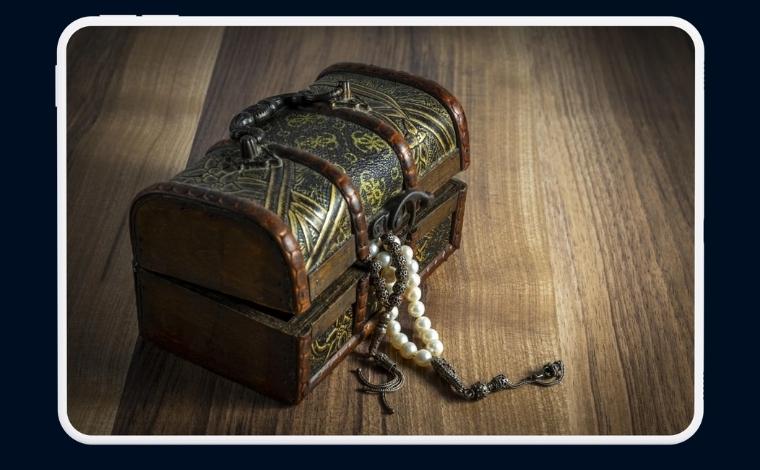
Psychometry through the Ages: From Shamans to Scientific Skepticism
Psychometry evolved from an ancient ritual into a parapsychological theory and eventually became a staple of fiction. It evolved through four distinct eras.
Objects that seem to carry stories beyond their physical existence have always fascinated humans. Ancient relics, heirlooms, and even everyday items often have an air of mystery about them. Psychometry is a unique way to uncover these stories.
It’s the ability to perceive information about an object’s past through physical contact, has always existed at the intersection of belief and skepticism. Some cultures regard it as a sacred gift, an access point to ancestral wisdom or divine insight. Others dismiss psychometry outright as an illusion, a superstition, or a stage trick. These opposing views show the human desire to access information beyond ordinary perception.
The term “psychometry” comes from the Greek words “psyche” (soul or mind) and “metron” (measure). At its core, the term suggests measuring something beyond the physical world—the emotional or spiritual residue that objects may carry from the people who once held them.
To understand how psychometry transformed from an ancient ritual into a parapsychological theory and eventually a fixture in fiction and pop culture, we must explore its evolution. Let’s trace its development through four distinct eras.
- Phase One: Ancient Civilizations and Spiritual Practices
- Phase Two: Medieval Mystics to the Industrial Age
- Phase Three: The Birth of Modern Psychometry
- Phase Four: Contemporary Times
Recommended article

The Empath Series
“The Empath Series” is a paranormal suspense thriller about empath Nathaniel Colt, who is thrust back into the world the former special agent thought he’d left behind—a world of danger and violence.
Phase One: Ancient Civilizations and Spiritual Practices
The concept of psychometry dates back to the earliest civilizations, when people believed objects absorbed their owners’ essence or energy. In a world where the spiritual and physical were deeply connected, people considered objects gateways to destiny that contained powerful, hidden knowledge.
Mystics and seers claimed that by examining personal items such as rings, swords, or relics, they could reveal personality traits, uncover secrets, and predict future events. These practices relied on intuition, symbolism, and sacred tradition rather than scientific evidence. In many cultures, object reading was inseparable from religious belief and ritual.
Ancient Egyptians believed that amulets and talismans held spiritual power and protected their bearers. Priests believed these objects carried the essence of their owners and contained emotional and energetic imprints that they could access through rituals. Similar beliefs shaped mummification ceremonies, in which priests placed artifacts with the dead to preserve a connection with ancestors and divine forces.
In China, people interpreted wear patterns on weapons or tools as clues to a person’s character or fate. Taoist practitioners emphasized harmony between qi (life energy) and material objects. Some stories describe monks who could assess health or temperament simply by examining a garment or piece of jewelry—an early form of intuitive object reading.
India’s spiritual traditions echoed these ideas. Hindus and Buddhists believed that prana, or life energy, could transfer through physical touch. Yogis and mystics claimed that by holding sacred objects during deep meditation, they could perceive past lives or discover hidden truths.
Recommended article

The Power of Psychometry: An Introduction to Token-Object Reading
Some people believe objects carry traces of the people who touched them. Psychometry explores the idea that objects can absorb and store energy, and thus offer glimpses into hidden stories and emotions.
Phase Two: From Medieval Mystics to the Industrial Age
During periods of religious upheaval in medieval Europe and beyond, mystical practices flourished. Clairvoyants, seers, and early mediums gained prominence by claiming heightened sensitivities that allowed them to perceive hidden truths or access distant knowledge through unseen channels. Though the term “psychometry” had not yet been coined, stories often described individuals who gained insight simply by holding personal objects—letters sealed away for decades, cherished keepsakes, or relics of the dead.
As scientific thinking expanded during the Renaissance, the cultural perspective shifted. Figures like Leonardo da Vinci championed observation and experimentation over superstition. Yet, even as empirical science advanced, many people continued to believe that objects could reveal profound insights into a person’s inner life or fate.
By the Victorian era, interest in spiritualism had surged again. Séances became a popular form of entertainment, and mediums often used personal items as focal points for their supposed supernatural communications. Although critics dismissed these practices as illusions or frauds, the public fascination only grew.
Recommended article
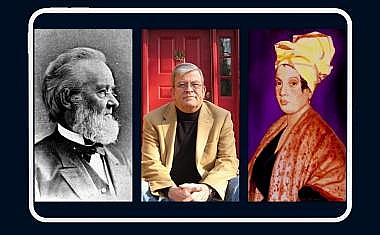
Psychometry: Notable Practitioners and Scientists
Throughout history, individuals believed themselves to possess the ability to ‘read’ an object. These spiritualists, mystics, and scientists-turned-believers shaped the understanding of psychometry.
Phase Three: The Birth of Modern Psychometry
Scientific attempts to investigate psychometry began in earnest during the late 19th and early 20th centuries. Newspapers across Europe and North America buzzed with stories about individuals who claimed they could read the personal histories from cherished belongings, or solve crimes by holding an object linked to the scene. As spiritualism surged in popularity and public fascination with mediums intensified, researchers became determined to test claims of object reading through controlled experiments rather than folklore or faith.
They designed experiments to eliminate sensory cues by sealing objects in boxes, masking scents, and removing identifying features. Then, participants described details about the objects’ owners or histories, relying purely on intuition or perceived energetic impressions. These studies highlighted a growing interest in how subconscious perception might influence human judgment.
As psychology and behavioral science evolved, the focus shifted from supernatural explanations to systematic inquiry. The term “psychoscopy” emerged, combining “psycho” (mind or soul) and “scopy” (to examine), suggesting an attempt to look beneath surface reality into deeper mental or energetic layers.
One of the most notable figures of this period was J. B. Rhine of Duke University. His research into extrasensory perception (ESP) sought statistical evidence under controlled conditions. While his findings occasionally showed unusual patterns, they often failed to replicate under stricter testing, perpetuating skepticism and debate.
Recommended article

Psychometry in Fiction: Token-Object Reading in Storytelling
Despite skepticism, psychometry fascinates in books, films, and TV. It connects characters across time and space while adding depth and mystery to a story.
Phase Four: Contemporary Times
During the twentieth century, the shift from supernatural explanations to scientific inquiry accelerated alongside advances in psychology and behavioral science. Researchers examined how subconscious perception influences judgment. Experiments measuring nonverbal cues revealed that people could infer significant information about others without direct conversation. The study of body language entered the mainstream and revealed that physical expression often reveals emotions that spoken words conceal.
In recent decades, the serious investigation of these phenomena has increased. While the field remains controversial, researchers now approach psychoscopy as a subject for scientific study, supported by documented cases and repeatable experiments.
The credibility of psychoscopic experiences depends on rigorous validation. Independent replication over extended periods strengthens claims that might otherwise appear anecdotal. Yet, thus far, no study has demonstrated that psychometric results reliably differ from chance or the techniques employed by mentalists.
Psychometry through the Ages: Takeaways
Long before the terms “psychometry” or “psychoscopy” existed, ancient civilizations explored the nature of energy, spirits, and unseen forces. This concept gained momentum in the nineteenth century, during the rise of spiritualism, when psychic research became more structured.
Although there are countless accounts of practitioners sharing personal information about possessions or faraway places, the scientific community remains skeptical due to the lack of consistent empirical evidence. However, rejecting every account outright disregard a significant amount of personal testimony from.
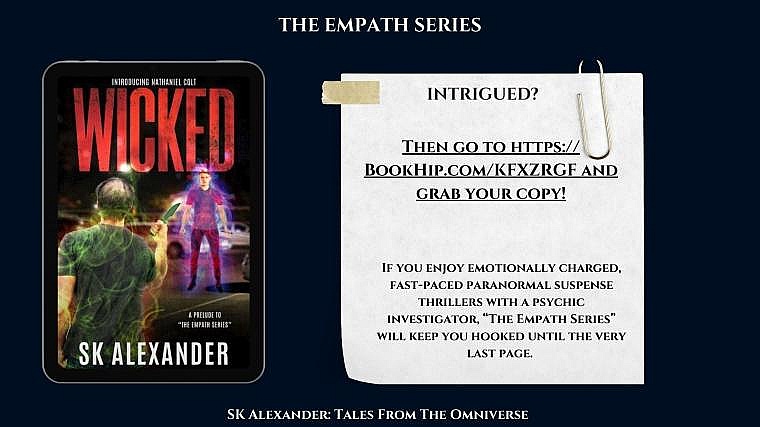
Sign up for the Tales from the Omniverse
Join SK Alexander’s email list and embark on a journey through The Omniverse. You will receive updates on his author's life, special offers, and upcoming releases.
As a thank you, you'll receive Wicked, the paranormal short story that introduces Nathaniel Colt, the main character of The Empath Series.