
Into the Mind of Darkness: The Classification of Serial Killers
Today, the term "serial killer" is established in law enforcement, media, and fiction. But where did the term come from, and what does it mean?
For millennia, serial killings have both horrified and captivated society, with Jack the Ripper probably being the most famous example. Yet he was not the earliest known serial killer in recorded history. Some historians credit Liu Pengli, a Chinese prince from the Han Dynasty in the 2nd century B.C., with this distinction. According to historical accounts, he organized excursions with slaves and runaways during which he killed innocent people and plundered their belongings.
Rise to Mainstream
Public fascination with serial killers surged during the 1970s and 1980s, fueled by highly publicized cases involving the Boston Strangler, the Zodiac Killer, Ted Bundy, and BTK.
According to historian Peter Vronsky, “serial killing” became mainstream in the US in spring 1981 when The New York Times used it to describe the actions of Atlanta serial killer Wayne Williams. Following this, The New York Times referenced serial killing 233 times throughout the 1980s. Usage increased dramatically during the following decade, reaching 2,514 mentions by the end of the 1990s. [1]
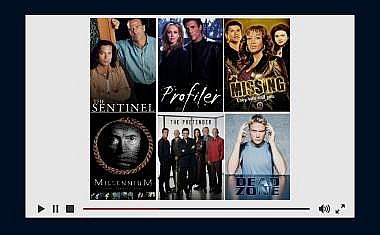
The 1990s brought another significant resurgence of public interest. Films such as The Silence of the Lambs and Se7en brought the psychology and methods of serial killers to the forefront of popular culture. Television followed. Shows such as Profiler and Criminal Minds brought serial-killer investigations to the small screen, with the latter remaining a television staple since 2005.
But what exactly constitutes serial killing?
Recommended article
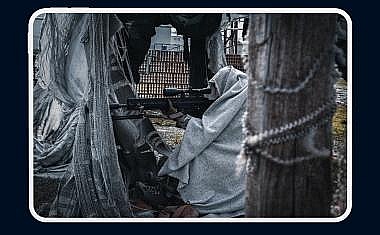
Snipers: The Lurking Hunters
Criminal snipers, or long-distance shooters, embody the epitome of deadly precision. These are the sniper archetypes, their modus operandi, and select examples.
What Is Serial Killing?
Various criteria and descriptors have been used to define what constitutes serial murder, but for me, theFederal Bureau of Investigation’s definition provides a straightforward framework. In 2005, the FBI hosted a multidisciplinary symposium in San Antonio, Texas, bringing together experts on serial murder from various fields and specialties.
Based on discussions and outcomes from the symposium, behavioral analysts in the FBI’s National Center for the Analysis of Violent Crime issued a comprehensive report in 2008. [2] In the report, they define serial murder as “the unlawful killing of two or more victims by the same offender(s), in separate events.” [3]
The emphasis on separate events distinguishes serial murder from other forms of multiple homicide, particularly mass murder. In Psychology Today, Scott A. Bonn, Ph.D., describes mass murder as “a one-time event that involves the killing of multiple people at one location.” [4] In such cases, the perpetrator may select victims randomly or target them for specific reasons, such as retribution or a personal vendetta.
The distinction is therefore relatively straightforward: serial murder involves multiple killings committed in separate events, while mass murder involves multiple victims killed during a single event.
Recommended article

Vigilantism - Taking Justice Into Your Own Hands
Throughout history, individuals, groups, and organizations have taken matters of justice into their own hands. But what exactly are vigilantes, what drives them, and are their actions justified?
Where Did the Term “Serial Killer” Come From?
There's been a lot of research and analysis on serial murder. But the term "serial killer" and the modern idea of what it means are pretty new. So, where and when did the term originate?
People often credit former FBI Special Agent Robert Ressler with the widely accepted origin of the phrase and its modern conceptual framework. During a lecture at the Police Staff Academy in the United Kingdom in 1974, Ressler reportedly introduced the term. It provided a succinct description for criminals who commit multiple murders, often following a particular modus operandi and, sometimes, driven by psychological motivations. [5]
However, Ressler isn’t the only one to popularize the terminology.
Author Ann Rule credits LAPD detective Pierce Brooks with coining the term. [6] Brooks was the mastermind behind the Violent Criminal Apprehension Program (ViCAP) system in 1985. [7] According to the FBI website, the system “maintains the largest investigative repository of major violent crime cases in the U.S.” [8] The system helps law enforcement agencies identify connections between violent crimes and is an important tool in the investigation of serial offenses.
Historian Peter Vronsky traces the terms serial murder and serial murderer even further back. He states that they first appeared in John Brophy’s 1966 book The Meaning of Murder. Brophy examines famous and obscure criminal cases alongside their social and psychological contexts. [9] In the book, Brophy examines famous and obscure criminal cases and their social and psychological contexts.
A contemporary review of the book in the Evening Star provides an early example of the terminology. The review describes a “mass murderer” whom Brophy called a “’serial’ killer who may be actuated by greed, such as the desire for money, or the retention or growth of power.” [10] Brophy gives examples ranging from the Medicis of Renaissance Italy to Henri Landru, the so-called “Bluebeard”, who murdered numerous wives after taking their money during World War I.
Origins Beyond the English Language
The history of the terminology becomes even more interesting when we look beyond English. In Germany, the concept and terminology date back to criminologist Ernst August Ferdinand Gennat (1880–1939). Through his work on cases involving Peter Kürten and Fritz Haarmann, Gennat helped bring public attention to serial offenders during the 1920s and 1930s.
In his 1930 publication "Die Düsseldorfer Sexualverbrechen", which examined the crimes of Peter Kürten, Gennat used the term "Serienmörder". [11] The direct translation is “serial murderer,” providing a German-language term for a distinctive category of multiple murders decades before the phrase became firmly established in American popular culture.
Serial Killing Terminology: Takeaways
The term "serial killer" has multiple origins. Multiple killings committed by the same offender occurred long before the term "serial killer" entered common discourse. Societies have grappled with these crimes for centuries, even lacking the terminology and investigative frameworks we have today.
Over time, the terminology evolved as criminologists, law enforcement officers, and writers sought ways to describe recurring patterns of multiple murders.
The term now occupies an established place in criminal profiling and criminology. It provides a framework for discussing and categorizing patterns of multiple homicides involving two or more victims by the same offender(s) in separate incidents.
Citations
[1] Vronsky, Peter (2013). "Serial Killer Zombie Apocalypse and the Dawn of the Less Dead: An Introduction to Sexual Serial Murder Today", in Serial Killers: True Crime Anthology 2014. RJ Parker Publishing.
[2] Morton, R.J. 2008. Serial Murder: Multi-Disciplinary Perspectives for Investigators. National Center for the Analysis of Violent Crime. Washington, D.C.: U.S. Department of Justice: https://www.ojp.gov/ncjrs/virtual-library/abstracts/serial-murder-multi-disciplinary-perspectives-investigators.
[3] Morton, R.J. 2008. Serial Murder: Multi-Disciplinary Perspectives for Investigators. National Center for the Analysis of Violent Crime. Washington, D.C.: U.S. Department of Justice: Page 9.
[4] https://www.psychologytoday.com/us/blog/wicked-deeds/201406/origin-the-term-serial-killer.
[5] Ressler, Robert K.; Schachtman, Thomas (1993). Whoever Fights Monsters: My Twenty Years Tracking Serial Killers for the FBI. New York: Macmillan/St. Martin's. Ressler & Schachtman 1993, p. 29, Schechter 2003, p. 5.
[6] Rule, Ann (2004). Kiss Me, Kill Me: Ann Rule's Crime Files. Simon and Schuster. p. 225.
[7] https://archives.fbi.gov/archives/news/stories/2010/august/vicap-anniversary.
[8] https://www.fbi.gov/wanted/vicap/homicides-and-sexual-assaults.
[9] Vronsky, Peter (2004). Serial Killers: The Method and Madness of Monsters. Penguin Group/Berkley.
[10] "Review: The Meaning of Murder". Evening Star. Washington, D.C. May 30, 1967. p. 12, col. 4.
[11] Gennat, Ernst (1930). "Die Düsseldorfer Sexualmorde". Kriminalistische Monatshefte. pp. 7, 27–32, 49–54, 79–82.

Let the hunt begin!
If you enjoy stories with a psychic investigator, serial killers, and an insolent dog, then you will love The Empath Series.
Click the button and get your paranormal thriller!