

Peering into the Abyss: What Drives Serial Killers?
Human beings are complex creatures with diverse wants and desires. This is also true for the malevolent minds of serial killers. So, what drives someone to repeatedly commit murder?
Our motivations and desires shape our actions. This is true even in the darkest corners of the human psyche. Like everyone else, serial killers are driven by a complex combination of needs, desires, beliefs, and circumstances. But exactly what drives these malevolent minds?
The following typology outlines several general categories of serial killers based on their motivations.
A quick disclaimer: I'm neither a psychologist nor a criminologist. This isn't an academic analysis, but a layman’s attempt to organize some of the most discussed motivations behind serial murders.
What law enforcement says
In 2005, experts from the FBI and other fields of criminology and forensic psychology gathered at a symposium on serial homicide to discuss the motivations behind serial murder. Based on these discussions, as well as the outcomes of the symposium, the FBI’s National Center for the Analysis of Violent Crime issued a comprehensive report in 2008.
In that, they concluded that offenders select victims based on three factors: availability, vulnerability, and desirability: “Availability is explained as the lifestyle of the victim, or circumstances in which the victim is involved, that allow the offender access to the victim. Vulnerability is defined as the degree to which the victim is susceptible to attack by the offender. Desirability is described as the appeal of the victim to the offender. Desirability involves numerous factors based upon the motivation of the offender and may include factors dealing with the race, gender, ethnic background, age of the victim, or other specific preferences the offender determines.” [1]
Recommended article

Into the Mind of Darkness: The Classification of Serial Killers
Today, the term "serial killer" is established in law enforcement, media, and fiction. But where did the term come from, and what does it mean?
Mission-Oriented Killers: Eradicating the "Undesirables"
Mission-oriented killers often harbor deep-seated prejudices and biases that they use to justify their actions. They label specific groups as evil or corrupt, which allows their violence to appear justified within their warped sense of duty. These killers often aim to cleanse society of those they perceive as dangerous or undesirable because of their race, religion, sexuality, or other characteristics. For example, there are vigilantes who kill perceived criminals.
Jack the Ripper, the infamous serial killer who terrorized London's Whitechapel district in 1888, epitomized this malevolent mission. He targeted prostitutes, believing he was purging society of what he saw as debauched elements.
Joseph Paul Franklin, a white supremacist serial killer who operated in the late 1970s and early 1980s, selected victims based on race and religion. Driven by his racist ideology, Franklin killed African Americans, Jews, and interracial couples in an attempt to intensify racial tensions and incite a race war.
Visionary Killers: Delusions and Hallucinations
A visionary killer is driven by psychosis, hallucinations, or delusions. These individuals experience a profound disconnect from reality, and their perceptions or beliefs compel them to commit violence. Within this category, two subgroups stand out: the "God-mandated" and the "Devil-mandated."
"God-mandated" visionaries see themselves as instruments of divine will, chosen to execute what they perceive as divine justice. In contrast, "Devil-mandated" visionaries experience religious paranoia or visions that compel them to commit violent acts in the name of a malevolent entity.
An example is David Berkowitz, aka the “Son of Sam,” who claimed that a demon in a neighbor’s dog ordered his New York City shootings. His statements, as well as the subsequent investigation, made his case a prominent example of the relationship between delusion, perceived external commands, and violent behavior.
Recommended article

Vigilantism - Taking Justice Into Your Own Hands
Throughout history, individuals, groups, and organizations have taken matters of justice into their own hands. But what exactly are vigilantes, what drives them, and are their actions justified?
Hedonistic Serial Killers: The Pursuit of Pleasure
Hedonistic serial killers derive gratification from their crimes. This gratification may involve inflicting pain, experiencing excitement, pursuing sexual fantasies, or obtaining material benefits. Experts commonly divide this category into three types: lust, thrill, and comfort killers.
Lust Killers: Violence and Sexual Fantasies
These individuals are driven by a combination of violence and sexual fantasies, and murder becomes part of a disturbing pattern of violence and sexual gratification. These fantasies may develop over long periods and become increasingly elaborate before manifesting as violent acts.
Thrill Killers: The Pursuit of Excitement
Thrill killers seek gratification from the excitement and stimulation associated with killing. The act itself becomes a source of euphoria, and the offender derives satisfaction from the fear, terror, and power experienced during the crime.
Comfort Killers: Murder for Material Gain
Comfort killers commit murder to achieve financial security, comfort, or personal gain. Unlike lust or thrill killers, their primary motivation is not the experience of killing itself but what the crime can provide.
Recommended article
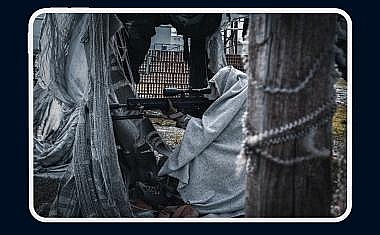
Snipers: The Lurking Hunters
Criminal snipers, or long-distance shooters, embody the epitome of deadly precision. These are the sniper archetypes, their modus operandi, and select examples.
Power and Control: The Need for Dominance
Some serial killers are driven by a desire for power and control. These offenders often feel inadequate, insecure, or powerless in their personal lives. They attempt to compensate for these feelings by dominating others. Their victims become tools through which they can assert dominance and dictate another person’s fate. Thus, murder becomes a way to restore a sense of power, control, and superiority.
This desire for dominance also influences how these offenders plan and carry out their crimes. Some meticulously organize their actions to maintain control over their victims and the circumstances of the crime.
Additional Classifications
Organized and Disorganized Killers
This typology is based on the level of organization at the crime scene. Organized killers plan meticulously and exhibit sophistication in their approach. They often lure victims with charm or trickery. Disorganized killers, on the other hand, act impulsively, leaving chaotic crime scenes and having difficulty maintaining a semblance of normalcy in their lives.
Angel of Death
These killers, often in healthcare or caregiving professions, intentionally cause harm or death to those under their care. Their motivations can range from a perceived sense of mercy to a desire for attention and recognition for their role in saving lives or dealing with death.
Team Killers
Some serial killers operate in pairs or groups, sharing the responsibility and thrill of the murders. The dynamics within these groups can vary, but the collective motivation often revolves around shared sadistic pleasure, mutual encouragement, or a warped sense of camaraderie.
Serial Killing Classifications: Takeaways
These categories are not definitive, but they provide a useful framework for understanding the various motivations behind serial murder. Moreover, no single motivation explains every serial killer because they often overlap.
For instance, mission-oriented killers may be driven by distorted ideologies, while visionary killers may act on hallucinations or delusions. Hedonistic killers seek various forms of gratification, ranging from sexual pleasure and excitement to material gain. Others are primarily driven by a desire for power and control.
Citation
[1] VMorton, R.J. 2008. Serial Murder: Multi-Disciplinary Perspectives for Investigators. National Center for the Analysis of Violent Crime. Washington, D.C.: U.S. Department of Justice. p. 18.: https://www.ojp.gov/ncjrs/virtual-library/abstracts/serial-murder-multi-disciplinary-perspectives-investigators

Let the hunt begin!
If you enjoy stories with a psychic investigator, serial killers, and an insolent dog, then you will love The Empath Series.
Click the button and get your paranormal thriller!